

Choose an AI assistant to open this article URL with a summary request. Review generated summaries against the original article.
| QUICK ANSWER: You cannot normally see a competitor’s private open, click, conversion, or revenue data. You can estimate email marketing effectiveness ethically by subscribing to public lists, recording cadence and offers, reviewing landing-page changes, monitoring public launches and customer response, and comparing those observations with your own controlled tests and industry benchmarks. |
What You Can Actually Know
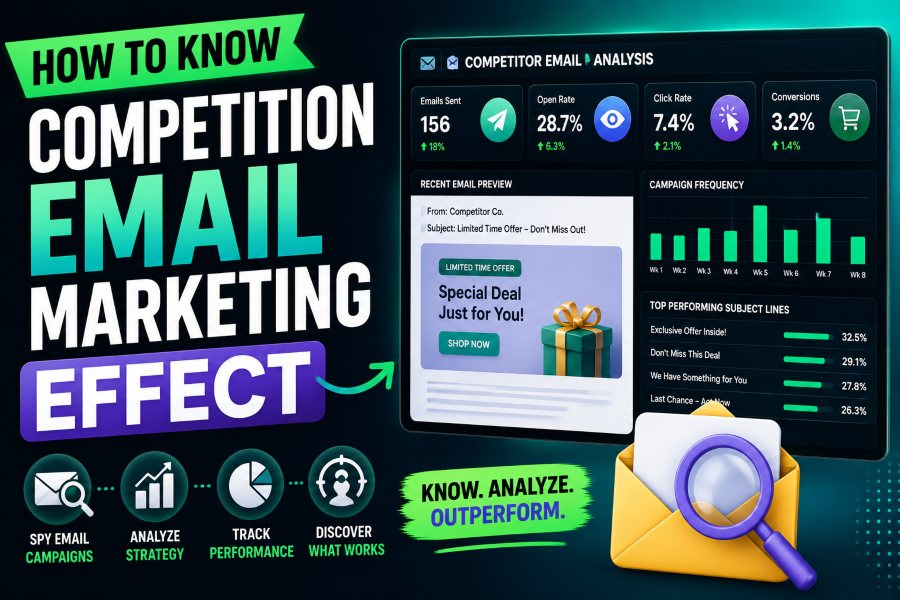
The keyword how to know competition email marketing effect describes a common business question, but it contains an important limitation: outside the company, you usually cannot know a competitor’s exact email performance. Open rates, unique clicks, conversions, revenue, complaint rates, list size, and attribution rules are private. Any tool claiming to reveal all of those figures without permission should be treated skeptically.
Competitive email research is still valuable when it focuses on observable strategy rather than invented certainty. You can study what a brand sends, who it appears to target, how often it communicates, which offers it repeats, where links lead, how the landing experience changes, and whether public business signals support the idea that a campaign is working.
| CORE RULE: Separate facts from inference. An email, landing page, public promotion, or stated offer is observable. The revenue it produced is an estimate unless the company discloses verified data. |
Define the Competitive Question First
Do not begin by collecting every email from every competitor. Decide what decision the research should support. You may want to refine a welcome series, understand promotion cadence, compare onboarding education, identify positioning gaps, or prepare a product launch. A narrow question keeps the analysis useful and reduces the temptation to copy surface-level tactics.
- Which audience or lifecycle stage are we studying?
- Which campaign type matters: welcome, newsletter, launch, cart, renewal, or re-engagement?
- Which observable signals would change our strategy?
- What period is long enough to capture a real pattern?
- Which conclusions will remain uncertain without private data?
Build an Ethical Competitor Email Panel
Choose three to six direct or adjacent competitors. Direct competitors sell a similar solution to a similar buyer; adjacent brands may compete for the same attention with a different product. Subscribe through normal public forms using business research inboxes. Do not misrepresent your identity to access restricted programs, impersonate customers, or obtain confidential information.
Record the signup page, date, promised frequency, consent language, preference options, and lead magnet. Use the same observation window for every brand. Thirty to ninety days is usually more informative than a single week because it captures onboarding, regular content, promotions, and periods of silence.
Track the Public Signals That Matter
Signup and expectation setting
Evaluate how prominently the brand invites subscription, what value it promises, which fields it requests, and whether the benefit matches the emails that arrive. A strong signup experience can support list growth, but you cannot infer list size from form quality alone.
Welcome speed and sequence
Record how quickly the first email arrives, how many messages appear in the initial sequence, and the job of each message. Look for education, proof, product orientation, objection handling, and the first commercial ask. Note whether the sequence changes after you click or ignore a message, without trying to defeat the brand’s systems.
Cadence and timing
Count sends by week and campaign type. Identify consistent days, seasonal bursts, launch windows, and quiet periods. Frequency alone does not reveal success; a brand may send often because the program performs well, because it is testing aggressively, or because it has poor governance. Treat cadence as a strategic choice to investigate.
Subject lines and preview text
Classify subject lines by angle: benefit, curiosity, urgency, proof, education, announcement, personal note, or offer. Record length, personalization, and whether the preview text extends the idea. Repeated patterns can reveal the brand’s messaging priorities, but not the open rate achieved.
Content, proof, and positioning
Capture the main problem, promise, differentiator, evidence, objections, and tone. Note whether the brand teaches before selling and how it uses case studies, reviews, numbers, demonstrations, guarantees, or founder stories. Look for claims competitors repeat; repeated language often signals a position they want the market to remember.
Offers and calls to action
Track price framing, discounts, bonuses, deadlines, trials, demos, and CTA language. Record which offer appears repeatedly and which disappears. Repetition may signal an evergreen winner, operational convenience, or lack of experimentation. It becomes more meaningful when combined with landing-page persistence and public promotion.
Landing pages and post-click experience
Visit public links safely and document message match, page speed, proof, form length, price, mobile usability, and the final conversion step. The email and landing page are one journey. A compelling email can still fail if the page changes the promise or adds excessive friction.
Create a Repeatable Competitor Scorecard
Score observable qualities on a simple one-to-five scale and attach evidence. Useful categories include signup clarity, welcome experience, audience relevance, message consistency, educational value, offer strength, proof quality, CTA clarity, landing-page alignment, mobile readability, preference control, and accessibility. Define each score before rating brands so personal taste does not become the method.
Add a confidence label to every conclusion. High confidence may mean a repeated pattern observed across many messages. Medium confidence may reflect several consistent examples. Low confidence should identify a hypothesis based on one campaign or an indirect signal. This practice keeps the report honest and helps stakeholders understand what needs testing.
Use Public Business Signals Carefully
Product launches, public promotions, customer comments, job openings, pricing changes, case studies, app-store activity, website updates, and company announcements can add context. If a competitor repeats an offer while expanding the associated product, that may support a hypothesis that the motion is valuable. It still does not reveal the email channel’s exact incremental effect.
Beware of survivorship bias. You see campaigns that were sent, not failed drafts, suppressed tests, internal debates, or unprofitable cohorts. Public praise can overrepresent enthusiastic customers, while public complaints can overrepresent negative experiences. Use multiple signals and label inference explicitly.
Benchmark Without Inventing Competitor Metrics
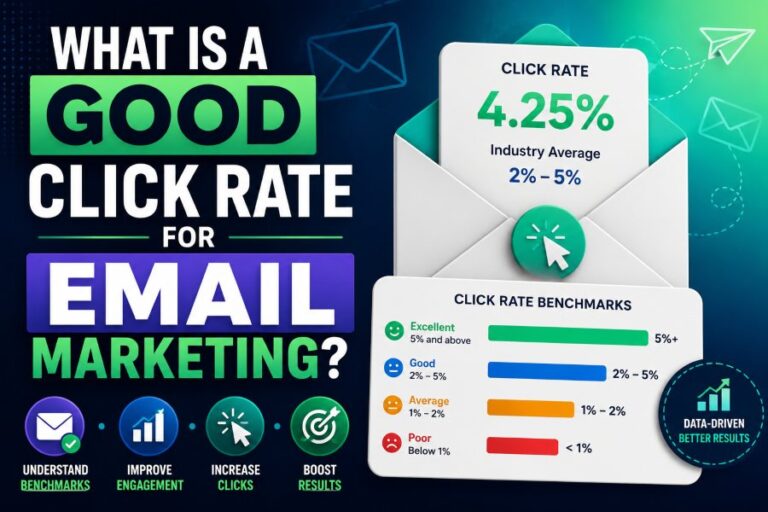
Use credible industry benchmarks to understand broad ranges and your own historical data to set operational targets. Mailchimp’s campaign benchmarking, for example, compares participating users with peers based on characteristics such as industry, audience demographics, and audience size. This is more defensible than guessing a named competitor’s click rate from the quality of its design.
Compare your newsletter with similar newsletters, your welcome flow with similar automated flows, and equivalent audience stages. Track medians over multiple campaigns. Definitions must match: unique clickers divided by delivered emails is not comparable with total clicks divided by opens.
Turn Competitive Observations Into Your Own Tests
- Write the observation: what repeated pattern did you see?
- State the hypothesis: why might that pattern help your audience?
- Adapt the principle to your positioning instead of copying the execution.
- Choose one primary metric and audience-health guardrails.
- Run a controlled test on a comparable segment.
- Record the outcome and decide whether to adopt, revise, or reject the idea.
Suppose several competitors lead product emails with a use-case story before introducing features. The transferable principle may be that context improves relevance. Your test could compare a customer-problem opening with a feature-first opening while keeping the offer and audience constant. The result from your subscribers matters more than the competitors’ choice.
Track Your Own Engagement With Better Context
Your advantage is access to first-party performance data. Use consistent campaign tags, CRM outcomes, website conversions, revenue, replies, unsubscribes, and complaints. For Gmail-based sales or follow-up messages, Mailtrackio can provide open tracking, live alerts, and a dashboard that helps teams act when interest may be fresh. Combine open events with replies, clicks, meetings, and pipeline changes.
Do not assume that an open equals careful reading. Apple Mail Privacy Protection can hide IP addresses and prevent reliable open measurement, while image loading and security scanners can create misleading events. Competitive analysis should never depend on attempts to expose a recipient’s identity or precise location.
Legal and Ethical Boundaries
Subscribe only through public, legitimate processes and respect unsubscribe requests, terms, intellectual property, privacy, and access controls. Do not scrape private accounts, obtain leaked lists, use stolen credentials, bypass paywalls or authentication, impersonate a person, or install tracking on someone else’s systems.
If you run your own marketing, follow applicable laws. The FTC’s CAN-SPAM guidance requires accurate headers and subject lines, a valid physical address, a clear opt-out method, and oversight of vendors sending on your behalf. European data-protection guidance requires an appropriate legal basis, transparency, and respect for objections to direct marketing. Requirements depend on jurisdiction and context, so seek legal advice when needed.
A Monthly Competitive Email Review
Collect
Archive public competitor emails, tag campaign type and audience stage, record timing, and capture the destination page. Keep the research inbox organized so the same evidence can be reviewed over time.
Compare
Identify repeated themes, new experiments, disappearing offers, and changes in cadence or positioning. Update scorecards only when new evidence justifies a change.
Decide
Choose one insight that addresses a real weakness or opportunity in your program. Assign an owner, hypothesis, audience, metric, and test date. Competitive research is useful only when it improves a customer decision or a measurable experiment.
Example: From Observation to Evidence
Assume three competitors send a short educational email two days after signup, then introduce a product offer on day five. The fact is the sequence and timing you observed. The inference is that education may prepare new subscribers for the offer. You still do not know whether the sequence lifts their conversion rate or whether it exists for operational convenience.
Translate that observation into a controlled test. Keep your welcome email, audience, offer, and day-five timing consistent. Add a useful educational message to half of eligible new subscribers on day two. Measure activation, day-five clicks, conversion, unsubscribes, and complaints. If the educational path improves the primary outcome without harming guardrails, you have evidence for your audience. If it does not, the competitor pattern should not become your strategy.
Document the result next to the original observation and confidence level. Over time, this creates a research library that distinguishes competitor inspiration from validated first-party learning. That distinction is the most reliable way to understand competitive email effect without claiming access to private data.
Common Competitive Research Mistakes
- Assuming polished design proves strong revenue or conversion.
- Guessing private metrics and presenting estimates as facts.
- Copying a tactic without understanding the audience or positioning behind it.
- Observing for only a few days and calling the result a strategy.
- Tracking too many competitors without a decision-focused question.
- Ignoring the landing page and judging the email in isolation.
- Using unethical access, deceptive identities, or personal-data collection.
- Letting competitor activity replace customer research and first-party testing.
Frequently Asked Questions
Can I see a competitor’s email open or click rate?
Not normally. Those metrics are private to the sender and its authorized platforms. Use industry benchmarks and your own comparable data rather than inventing a named competitor’s performance.
Is it legal to subscribe to competitor newsletters?
Public newsletter subscription for legitimate research is generally different from unauthorized access, but laws, terms, identity, and intended use matter. Do not misrepresent yourself to access restricted information, and obtain legal guidance for sensitive programs.
How long should I monitor competitor email?
Thirty to ninety days provides a practical initial sample. Continue monthly if email is strategically important, and include seasonal periods relevant to your market.
What is the best evidence that a competitor campaign works?
Verified public results are strongest. Otherwise, repeated campaigns, persistent offers, aligned landing pages, and supporting business signals can strengthen a hypothesis, but they still do not prove incremental email performance.
Should I copy a competitor’s best email?
No. Extract the underlying principle, adapt it to your brand and audience, and test it. Copying risks weak differentiation, intellectual-property issues, and poor results because you do not share the competitor’s context.
Put the Insights Into Action
Use Mailtrackio to add Gmail open tracking, live alerts, and practical follow-up visibility to the messages where timing matters. Visit Mailtrackio and combine engagement signals with replies, clicks, conversions, and respectful communication.

Comments
0 responsesNo comments yet. Be the first to share your thoughts.